


 SIGN UP FOR OUR




Remember back in mid-May when a man was shot dead as his car pulled into the gate of a private school in Guachipelín, Escazú, Costa Rica?
Well, the victim of the shooting, Elias Akl, and his brother, Ziad Akl, both of Lebanese descent and with U.S. connections as well, appear to have run a money-lending organization in a sort of thug-like manner.
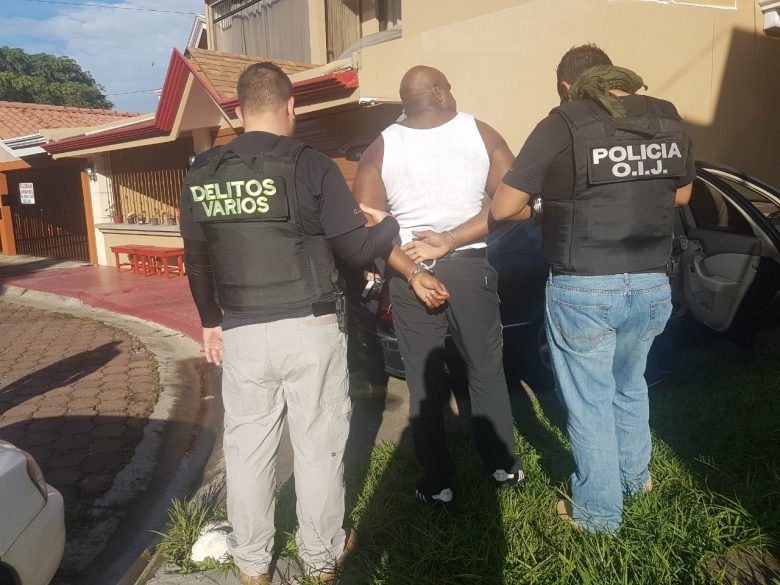
Two men who are alleged to have formed part of the operation run by the Akls were arrested on Monday morning as suspects in extorting and threatening formal and informal taxi drivers who allegedly failed to pay back their loans.
The arrests were made by agents of the Judicial Investigation Police (OIJ) in a house in Belén de Heredia, where they captured a subject with the last names Pinnoch Campbell, 46; and on a highway in Escazú, where a young man surnamed Fernández Jiménez, 27, was captured.
According to preliminary reports by the OIJ, Fernandez apparent located the Akl brothers’ debtors, approached them using verbal threats, and, if they still hadn’t paid up, took them to Pinnoch, who held them against their will, and then used force to extort them.
The Judicial Police reported that the 27-year-old is being investigated for at least four counts of extortion, while the other is linked to the same offense and four counts of deprivation of liberty and attempted murder.
Emilio Segura, head of OIJ’s Miscellaneous Crimes, said that according to the investigation, both have ties to the group of brothers Elías and Ziad Akl.
The Akl-led lending ring provided loans in the Escazú area with exorbitant interests; then, when the victims were unable to pay, they resorted to violence, threats and extortion.
Elías Akl was shot apparently by paid assassins on May 15 in Escazú and his brother was captured the same day at the Alajuela-San José Juan Santamaría International airport as he was attempting to leave the country. The assassins remain at large
“The investigation began at the beginning of the year … Most of the victims were taxi drivers, both formal and informal, but we do not know how much money they were lent to them because this varied according to what they needed at the time,” added the OIJ’s Segura.



