


 SIGN UP FOR OUR
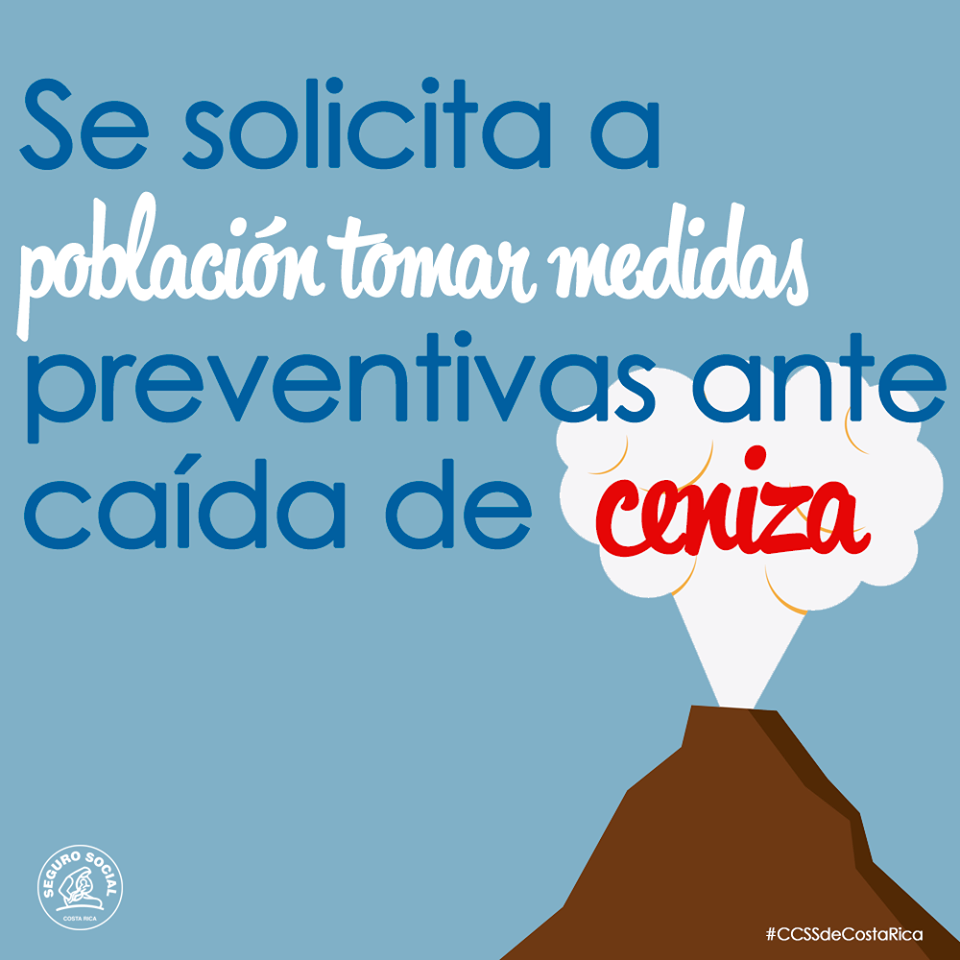
Since this past February 2, the Turrialba Volcano in Cartago, Costa Rica has continued the emission of ash in a passive and constant way and in moderate quantities.
The column of ashes, aerosol and gases elevates close to 300 meters above the west crater, and the wind is directing the column towards the southwest-west and northwest. Communities in Cartago; San Jose (specially Coronado, Goicoechea, San Pedro, Curridabat, Pavas); Heredia (Central, Santo Domingo and Belen) and Alajuela (central), have reported small amounts of ash fall and a sulfur-like smell.
Equipment from the Volcanic Gas and Aerosol Monitoring Station located in Coronado-San Jose has registered and important increase in the concentrations of SO2 gas, (up to almost 10 ppb /parts per billion) and fine aerosols to the excess of the recommended maximum value.
The quantities of fine volcanic particles in the air in the area close to the Turrialba Volcano and the Central Valley can cause health problems for those who are sensitive and even the general population.
During the first week of February some residents of the Central Valley and Turrialba have already reported some issues like itchiness and irritation around the eyes, lips and face as well as dryness of the throat and nostrils . These symptoms are caused by contaminating agents in the atmosphere like sulfur dioxide gases and fine corrosive and acid particles product of the volcanic emissions.
Health authorities recommend the use of artificial tears, wet towels, long sleeve shirts, and in extreme cases a surgical mask. Pay special attention to children and senior adults.



