


 SIGN UP FOR OUR
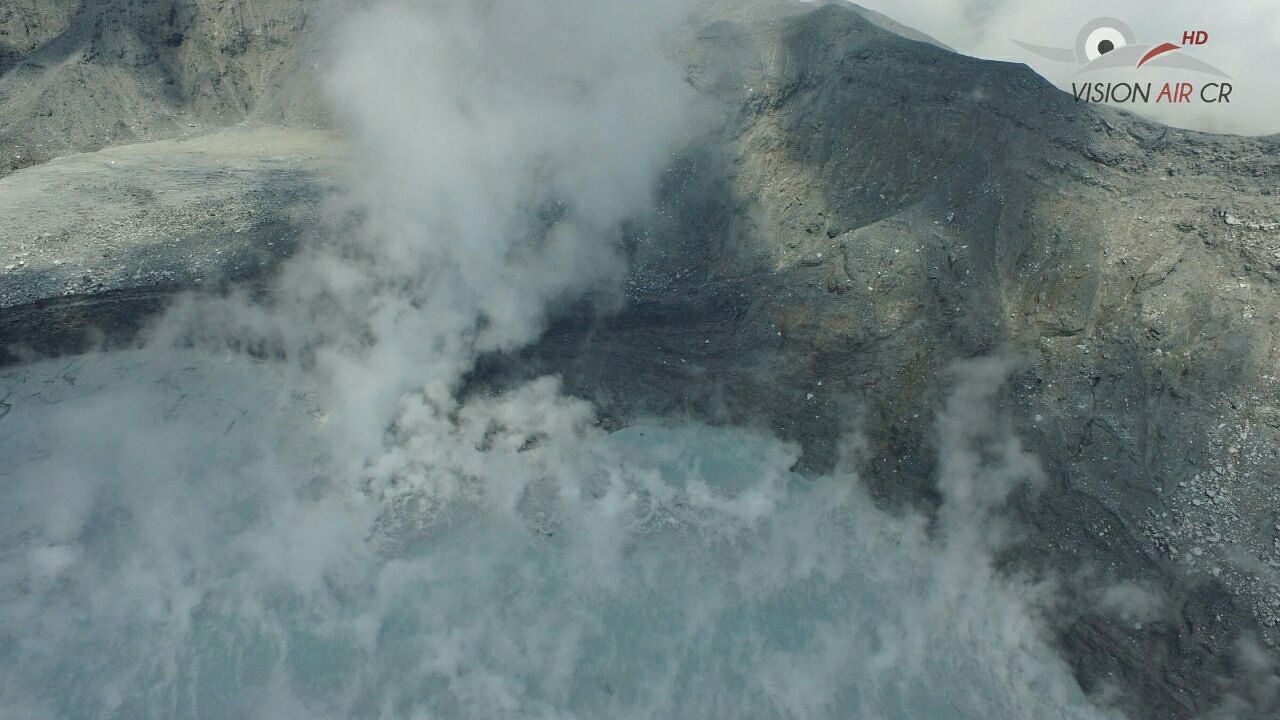
Last night Poás Volcano spitted out incandescent rocks in an eruption that occurred at 7:08 p.m. local time, it registered a few smaller eruptions during the early hours of this Wednesday, April, 19; but this morning at 6:29 a.m. and 8:43 a.m. it had two important eruptions (video available at the end of the article).
Volcanologists that have been studying the recent activity at Poás where able to confirm the presence of magma in 5% of the materials erupted, which is an indicator that the activity it has shown so far could be just the beginning of a longer active phase and that could generate more violent eruptions than the ones seen so far. The particles expelled by the volcano are mostly secondary minerals, preexistent rocks and juvenile material.
Gino González, volcanologist of Volcanes Sin Fronteras, explained that small quantities of magma are making their way up inside the volcano which makes it more ¨explosive¨; this magma combined with the water of the lake is what has been causing the events in the past few days, these type of eruptions are referred to as magmatic or phreatomagmatic eruptions.
The report provided by Volcanes Sin Fronteras states that these type of eruptions didn´t occur in Poás Volcano since 1955, and the heat generated by magma could lead to violent eruptions that could reach an altitude of 5 kilometers. ¨It´s like having a pan with hot oil and adding some drops of water to it¨ explained González in an interview with local news site CRHOY.
Experts cannot predict how long this period of activity could extend for, it could be weeks or months.
The National University’s Volcanology and Seismology Research Institute (OVSICORI) answered some of the most common questions the population has regarding the activity:
Q/Could Poás Volcano have lava eruptions and if so which areas could be affected?
A/ The main dangers associated with an active volcano refer to lahars (a type of mudflow, see video below) and pyroclastic flow (a fast-moving current of hot gas above 100°C and volcanic matter) which would be limited to the areas very close to the crater and of slow advance. This is why strict vigilance is kept over the rivers
Q/ Could this cause earthquakes?
A/The seismic signals that originate in volcanic areas are particular of each volcano, the activity usually presents very small earthquakes produced by the movement of magma and the gas pressure inside the volcano. These earthquakes are very small and local.
Q/Will the activity at Poás Volcano affect San José?
A/ The eruptive activity practically will not affect the metropolitan area, in the event of ash-fall this is distributed by the wind and the direction of the winds will take it to the areas of Naranjo, Sarchí and Grecia.
Waterfall of Bajos del Toro after the eruption of April 12, sediments thrown by the volcano produced what experts call a lahar:



